
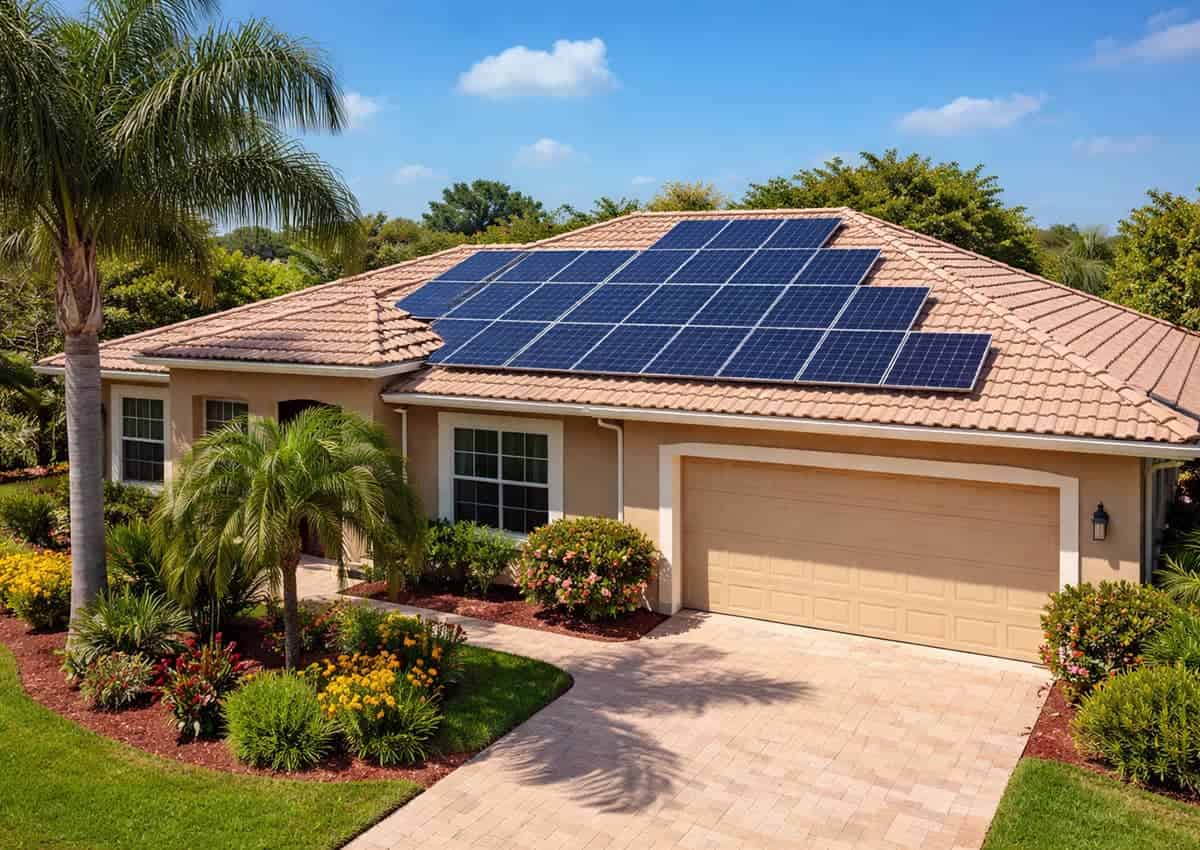
"Free" Solar Panels in Florida: What $0-Down Solar Really Means
Find out if you're eligible for $0-down solar in Florida!
See our privacy policy before submitting.
Many Florida homeowners see ads for "free solar panels" and wonder if the offer is real. The short answer: no one is giving away equipment at no cost. Those offers typically mean little to no upfront payment. You pay through a financing plan or use a system owned by a third party.
Compare equipment, ownership and financing terms for your home.
Last reviewed:
Key Takeaways
"Free solar" typically means no upfront payment through a loan or a lease — not free equipment.
Battery storage is valuable for backup power during hurricanes and maximizing your solar investment.
A solar loan is often the best route for ownership and long-term value.
Florida incentives including net metering and property tax exemptions can significantly reduce your total system cost.
Florida Solar Guide
"Free" Solar Panels in Florida: What $0-Down Solar Really Means
Many Florida homeowners see ads for "free solar panels" and wonder if the offer is real. The short answer: no one is giving away equipment at no cost. Those offers typically mean little to no upfront payment. You pay through a financing plan or use a system owned by a third party.
The path to affordable solar in Florida comes from smart financing combined with favorable state tax treatment and utility credit policies — not from a statewide rebate check.
If you are exploring solar in Florida, the key question is not whether solar is free. The real question is which ownership model makes the most financial sense for your home.
Federal Homeowner Credit: What Changed
The 30% federal Residential Clean Energy Credit under IRC §25D ended for homeowner expenditures after December 31, 2025, under the One Big Beautiful Bill Act signed July 4, 2025. Cash and loan purchases made now do not qualify. A separate credit under IRC §48E remains available to eligible system owners for third-party-owned residential solar placed in service through the end of 2027, subject to eligibility requirements. In Florida, this means solar leases: the system owner, not the homeowner, claims the credit. Any benefit to the homeowner depends on the lease terms.
This is one of the main reasons $0-down solar programs exist today. The provider gets the federal incentive. That lets them install and own the system with no upfront cost to the homeowner. In exchange, the homeowner leases the equipment under the agreed payment terms.
That structure — not a government giveaway — is what makes "free solar" advertising possible.
Two $0-Down Solar Options
Option 1: Solar Loan (Most Common Ownership Option)
Finance the purchase and own the equipment. Compare the interest rate, total repayment, and maintenance responsibilities.
Option 2: Solar Lease
Pay to use equipment owned by the provider. Review monthly payments, escalators, maintenance, and transfer terms.
Read the full $0-down solar lease versus loan comparison and explore Florida solar financing terms.
Why Battery Storage Is Especially Relevant in Florida
Florida's weather patterns make energy resilience a serious consideration. Hurricanes and tropical storms can lead to extended grid outages.
Solar panels alone do not power your home during an outage unless paired with battery storage. A battery stores extra power made during the day. You can use that power when the grid goes down or after sunset.
For many Florida homeowners, battery storage offers more than bill savings. During emergencies, it backs up fridges, medical devices, internet service, and essential lights.
Battery systems can also help reduce reliance on utility power during peak usage periods, improving overall energy management.
Emergency Power
Keep essential devices running during hurricanes and grid outages
Energy Maximization
Store excess solar energy for evening use when rates are higher
Peak Shaving
Reduce reliance on utility power during expensive peak hours
Florida Solar Incentives & Utility Credits
| Incentive | Type | Description | Typical Value |
|---|---|---|---|
| Property Tax Exemption | Florida State Incentive | Solar installations are exempt from property tax assessment, protecting your home value from tax increases | Saves hundreds annually |
| Sales Tax Exemption | Florida State Incentive | Solar equipment purchases are exempt from Florida's 6% sales tax | 6% of equipment cost |
| Net Metering | Utility Credit | Earn credits for excess solar energy sent to the grid, which can offset future electricity bills | Varies by utility |
Important: Always check which incentives are available now and who qualifies. Programs and deadlines change often. Ask a tax professional about tax credits.
What Solar Incentives Actually Exist in Florida?
Florida does not currently offer a statewide rebate program that pays homeowners directly for installing solar. Instead, the financial advantages come from tax exemptions and net metering rules.
Property Tax Exemption
Florida's property tax exemption prevents your home's assessed value from increasing due to solar installation. This means you can improve your property without triggering higher property taxes.
Sales Tax Exemption (6%)
The state also exempts qualifying solar equipment from Florida's 6% sales tax, reducing the initial project cost compared to many other states.
Net Metering Credits
Most investor-owned utilities in Florida also provide net metering. Extra power your system makes during the day can go to the grid and earn account credits. Those credits help offset power used at night or when solar output is lower.
The Real Story: These policies, when combined with financing options, are what create real savings potential in Florida.
Compare Ownership and Costs
Ownership determines who maintains the system and receives applicable incentives. Use our Florida solar cost guide, check Florida solar incentives and utility credits, and evaluate whether solar is worth it for your home. When you are ready for quotes, follow our guide to choosing a Florida solar installer.
Is Solar Worth It in Florida?
Florida's climate provides consistent solar production throughout the year. With strong sunlight levels across cities like Miami, Orlando, Tampa, and Jacksonville, systems generate reliable output compared to many northern states.
At the same time, electricity demand in Florida is high due to air conditioning usage for much of the year. When monthly utility bills regularly reach $200 or more, stabilizing long-term energy costs becomes appealing.
For homeowners who choose ownership, payback periods often fall within a reasonable range depending on system size and utility rates. For those who choose third-party programs, the focus is typically on immediate monthly savings without upfront expense.
When you combine abundant sunlight, tax exemptions, net metering policies, and structured financing options, Florida remains one of the more practical states for residential solar adoption.
The Bottom Line: Florida's consistent sun, rising electricity costs, and state incentives make solar a practical investment for homeowners focused on long-term energy savings and storm resilience.
Frequently Asked Questions
Sources & References
- IRS: Residential Clean Energy Credit and its end date
Who qualifies for the homeowner federal credit. Does not establish a current installation price.
- IRS: Clean Electricity Investment Credit
The separate system-owner credit and who qualifies.
- Florida Statutes §193.624: renewable-energy property assessment
How qualifying home renewable-energy value is left out of the tax assessment.
- Florida DOR: Solar Energy Systems (TIP 19A01-09)
The sales/use-tax exemption for qualifying solar systems and parts.
- FPSC Rule 25-6.065: customer-owned renewable generation
Investor-owned utility rules for interconnection and metering. Municipal and cooperative terms differ.
- U.S. DOE: Homeowner’s Guide to Solar
Roof suitability, power output, storage and ownership only. Use the IRS sources for current tax rules. This guide has older tax information.
What to expect from a quote request
We connect your request with installer partners and get paid for those connections. Availability varies. Review the contractor and bid, then decide whether to continue.
Before signing, verify the Florida contractor’s license, request insurance evidence and compare the full price and contract terms.
Ready to Start Saving with Solar?
Request solar quotes from installer partners. You decide whether to proceed.